Pressure you can
actually hold.
Negative air pressure is the mechanism that makes containment work. The barrier defines the space, but the machine is what keeps contaminated air inside it and moving through a HEPA filter before it reaches a corridor. On Class III and Class IV work, sizing the unit to the volume of the space and keeping the filter train clean is the difference between a containment that performs and one that only looks like it does.
The full Negative Air & HEPA catalog.
 Oncore Vetted
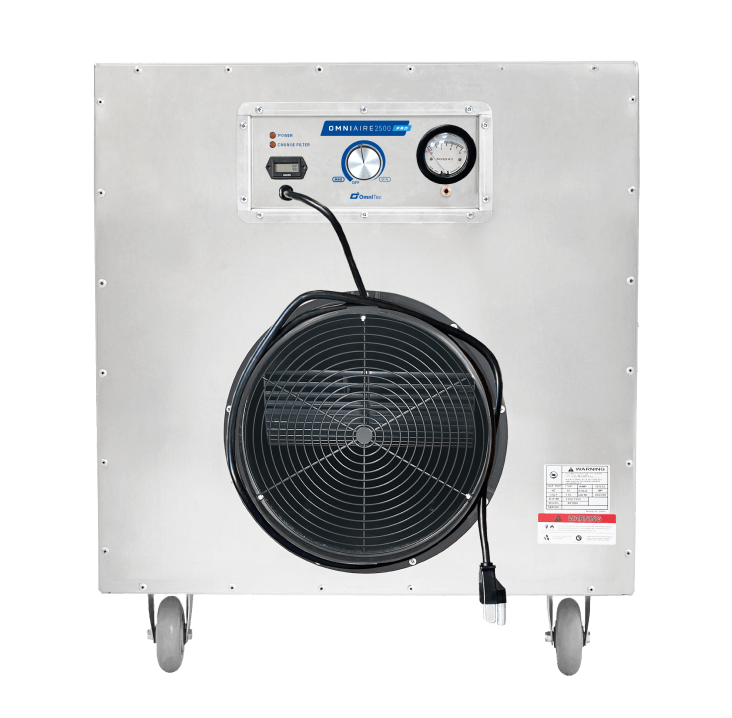
OA2500 PRO – Negative Air Machine
The most powerful negative air machine in its class, delivering up to 2,500 CFM with variable speed control to match any containment demand. Built for large-scale healthcare construction and remediation projects, the OA2500 PRO accepts a 24"×24"×12" filter and provides unmatched airflow performance in a field-ready package.
 Oncore Vetted
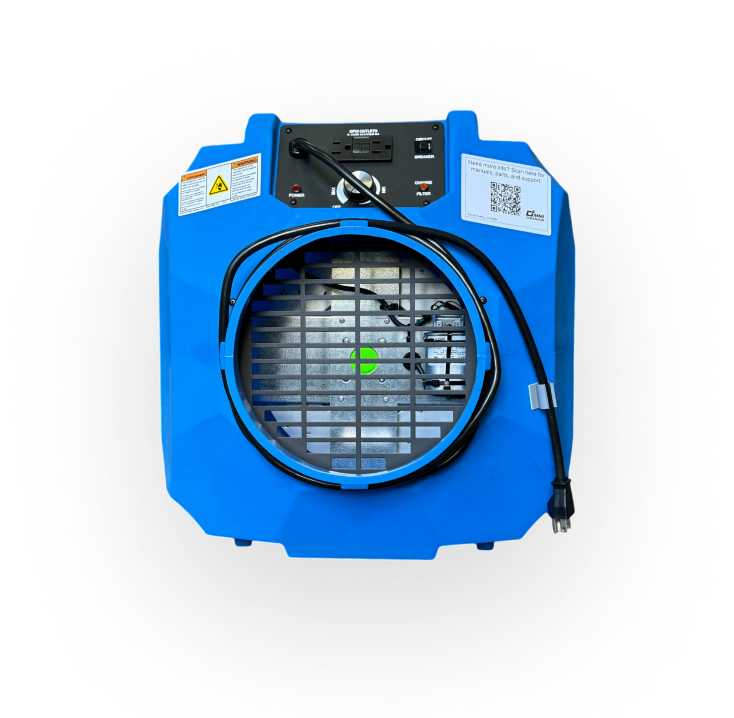
OA600N PRO – Nitro Negative Air Machine
A rugged, rotomolded negative air machine engineered for portability and quiet operation. Features a built-in GFCI outlet with daisy-chain capability — run up to 3 units from a single circuit. The ideal solution for small containment areas or any environment where low noise is a priority.
 Oncore Vetted
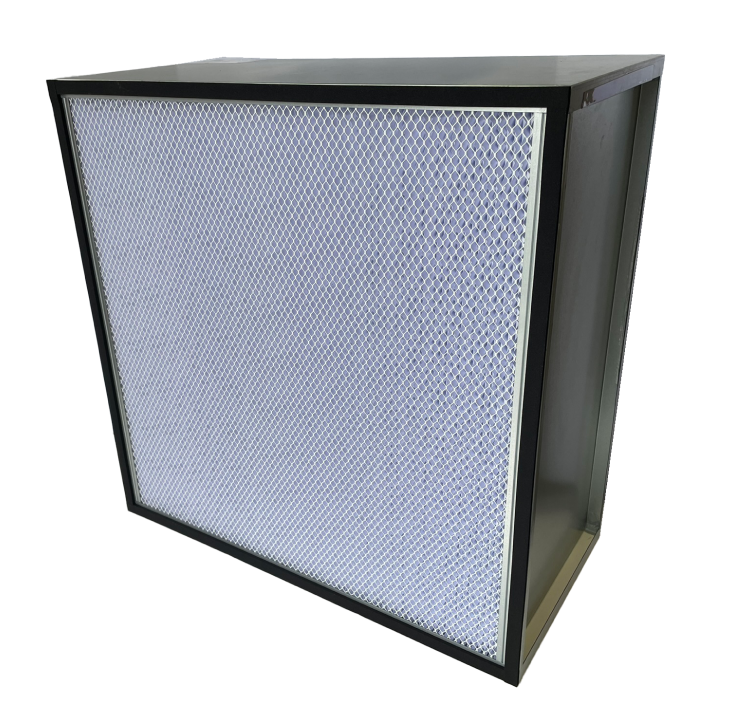
HEPA Filters (Multiple Sizes)
Replacement HEPA filters available in both wood and metal frames to suit a wide range of air machines and job site requirements. Choose from standard to high capacity, and 99.97% to 99.99% medical-grade efficiency, capturing particles as small as 0.3 microns — including dust, mold, bacteria, and other airborne contaminants.
 Oncore Vetted
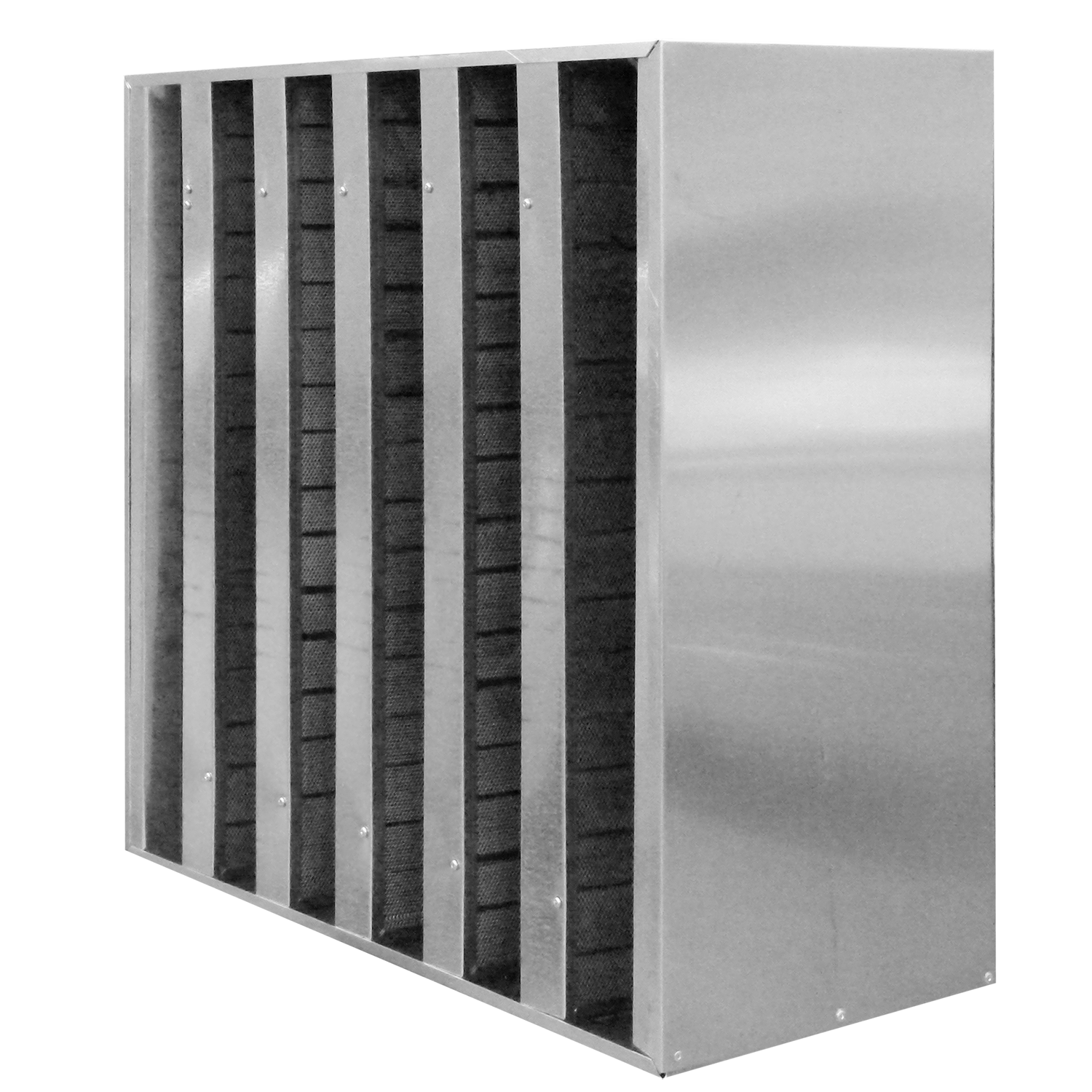
Bulk Carbon Filters (Multiple Sizes)
High-capacity activated carbon filters designed for odor and chemical vapor control. Available in multiple sizes for use with Omni CleanAir air machines, ideal for remediation and construction environments where VOC and odor management is required.
 Oncore Vetted
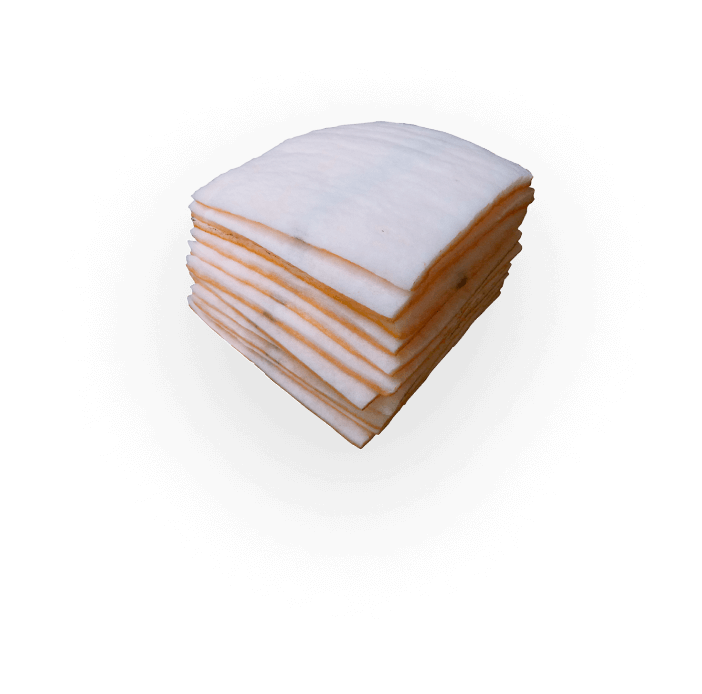
Poly Pad Filters (Multiple Sizes)
Versatile MERV-9 poly pad filters designed for use as a pre or post filter with negative air machines. Available in multiple sizes to extend the life of primary HEPA filters and maintain optimal airflow performance on the job site.
What to check before you buy.
Guidance from the Oncore consultants who write these permits and inspect the barriers that come out of them.
Ask a Consultant- 01
Size the machine to the room, not to the catalog. Air changes per hour depend on the cubic volume of the contained space, and a unit running at the bottom of its range with a loaded filter will not deliver the exchange rate the plan assumed.
- 02
Treat filters as consumables with a schedule. A HEPA filter that is doing its job is progressively restricting airflow, which means the pressure differential drops over the course of a project unless pre-filters are changed on a defined interval.
- 03
Use pre-filters and poly pads to protect the HEPA. The HEPA is the expensive part of the stack, and staged filtration in front of it is the cheapest way to extend its service life on a dusty demolition job.
- 04
Add carbon when the work involves odor or off-gassing. Adhesives, solvents, and roofing work generate complaints that particulate filtration alone will not resolve, particularly near patient care areas.
The classes this category serves.
Class III
Work that generates moderate to high dust levels, or that requires removing a fixed building component such as a wall, ductwork, or casework.
Critical barriers that fully seal the work area, negative air pressure maintained with HEPA filtration, and every penetration sealed. Pressure has to be verified, not assumed.
Class IV
Major demolition and construction. Work spanning multiple shifts, requiring consecutive work shifts, or involving heavy demolition and removal of a complete cabling or ceiling system.
Rigid sealed barriers with an anteroom for gowning and equipment transfer, continuous negative air pressure with HEPA exhaust, tacky mats at every transition, and documented monitoring for the life of the project.
Not sure which class your project falls under? Oncore performs the risk assessment and writes the ICRA permit, and our ICRA 2.0 training teaches your team to do it in house.
Need the containment
scoped properly?
Buying the right product is the last step. Oncore performs the risk assessment, writes the ICRA permit, and monitors the barrier through the life of the project.