Proof the barrier
did its job.
A surveyor is not asking whether you installed negative air. They are asking whether the containment held negative pressure for the duration of the project, and whether anyone would have known if it had not. A differential pressure monitor answers both questions. It alarms when the barrier loses pressure so the crew can fix it in the moment, and it produces the record that closes out the permit.
The full Pressure Monitoring catalog.
 Oncore Vetted
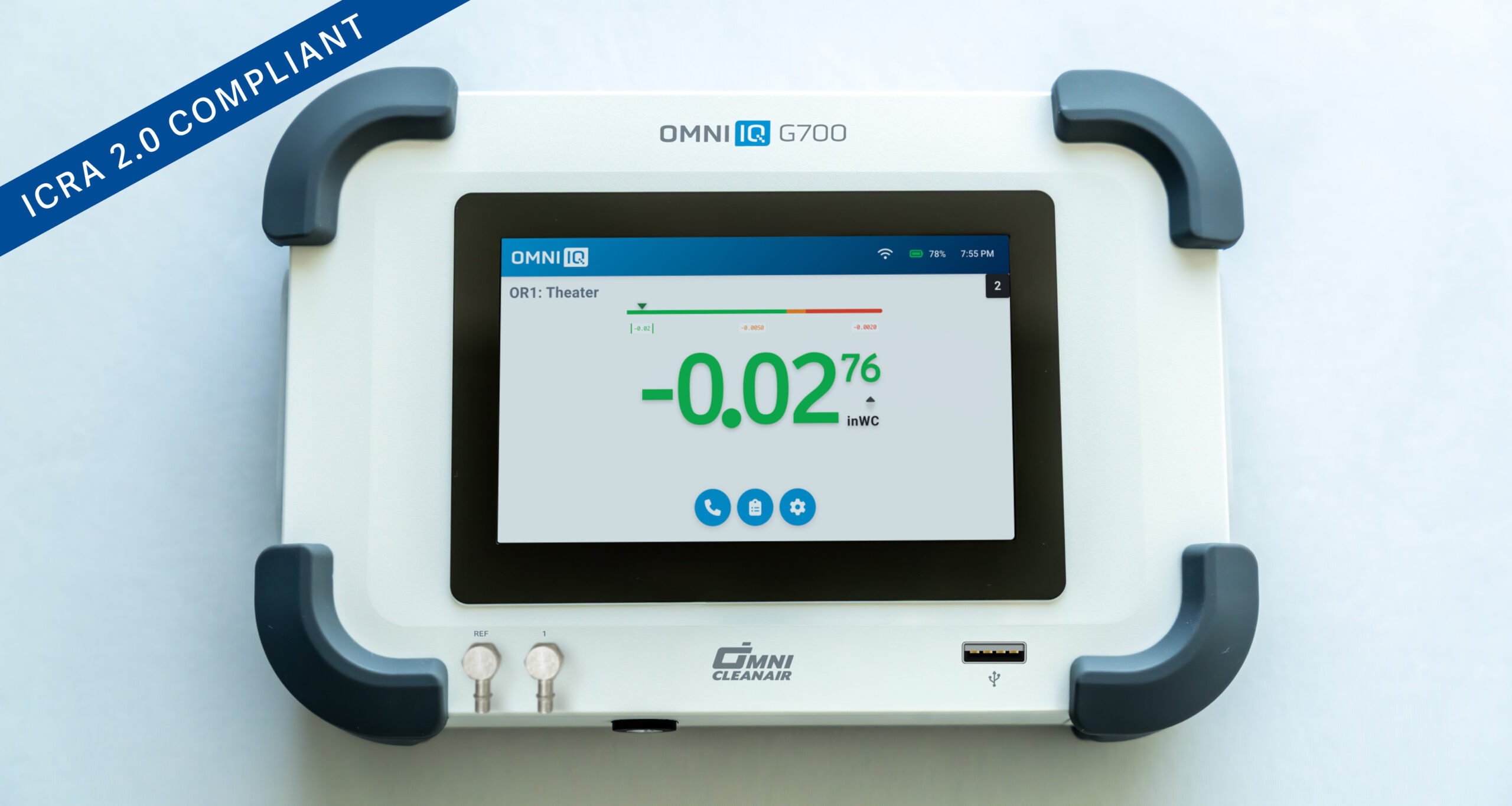
Omni IQ™ G700 – Differential Pressure Monitor
An intelligent differential pressure monitoring device designed for healthcare construction and infection prevention environments. Connects to the Omni IQ cloud platform for real-time alerts, remote monitoring, and automated compliance reporting.
 Oncore Vetted
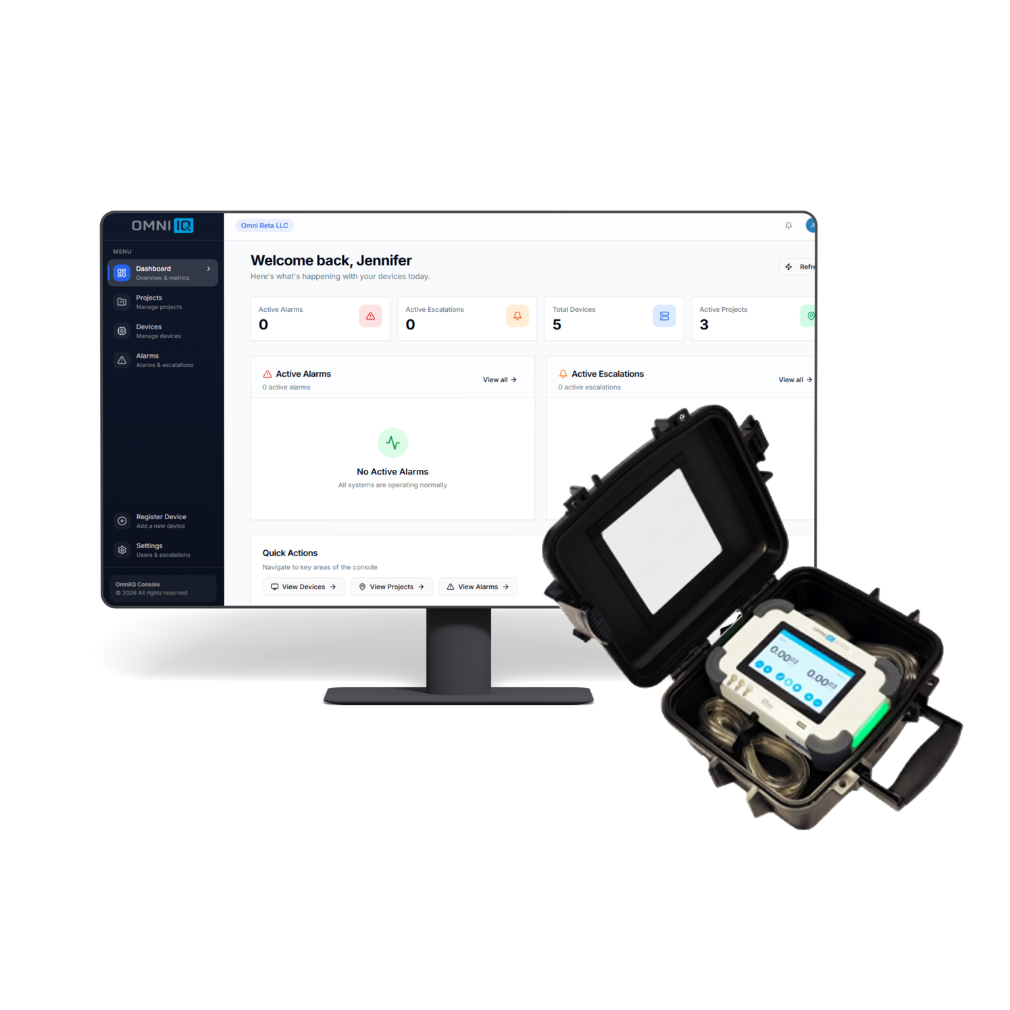
Omni IQ™ G720 – Differential Pressure Monitor
An intelligent three-zone differential pressure monitoring device simultaneously tracking the construction site, anteroom, and hallway. Connects to the Omni IQ cloud platform for real-time alerts, remote monitoring, and automated compliance reporting.
What to check before you buy.
Guidance from the Oncore consultants who write these permits and inspect the barriers that come out of them.
Ask a Consultant- 01
Choose continuous monitoring over spot checks on any project running longer than a shift. A daily manometer reading tells you the containment was negative at the moment someone looked at it, which is the weakest possible version of the evidence.
- 02
Make sure the alarm reaches someone who can act. A monitor that beeps inside a sealed containment at two in the morning has not protected anyone; audible and remote notification are what turn a reading into a response.
- 03
Log the data, not just the alarm. The value at closeout is a continuous record showing the differential across the whole project, including how quickly excursions were corrected.
- 04
Place the sensor where the pressure boundary actually is. Readings taken well inside the containment or near a return can miss exactly the leakage at the barrier line that the monitor exists to catch.
The classes this category serves.
Class III
Work that generates moderate to high dust levels, or that requires removing a fixed building component such as a wall, ductwork, or casework.
Critical barriers that fully seal the work area, negative air pressure maintained with HEPA filtration, and every penetration sealed. Pressure has to be verified, not assumed.
Class IV
Major demolition and construction. Work spanning multiple shifts, requiring consecutive work shifts, or involving heavy demolition and removal of a complete cabling or ceiling system.
Rigid sealed barriers with an anteroom for gowning and equipment transfer, continuous negative air pressure with HEPA exhaust, tacky mats at every transition, and documented monitoring for the life of the project.
Not sure which class your project falls under? Oncore performs the risk assessment and writes the ICRA permit, and our ICRA 2.0 training teaches your team to do it in house.
Need the containment
scoped properly?
Buying the right product is the last step. Oncore performs the risk assessment, writes the ICRA permit, and monitors the barrier through the life of the project.